A smart small bedroom design can make even the tiniest room feel calm, organised and surprisingly spacious. When floor space is limited, every choice matters more: the colour of the walls, the height of the bed, the glow of the lighting and the exact spot where the desk goes. Get them right and a compact bedroom stops feeling like a compromise — it becomes a room you love spending time in, whether you are sleeping, reading, working or unwinding after a long day.
In this guide, we walk through three real small bedroom ideas built around the same winning formula: dark, cosy bedding, warm or coloured LED lighting, clever vertical storage and a proper study area that fits without swallowing the room. Each look proves that a small space can carry a strong personality. Along the way, you will find practical styling tips, LED lighting advice and study-desk layouts you can copy in almost any bedroom, no matter how narrow or awkwardly shaped it is.
Table of Contents
- Modern Black & Red LED Small Bedroom Design with Study Desk
- Minimalist Grey & Wood Slat Small Bedroom Decor Idea
- Cozy Black & Warm LED Small Bedroom with Study Area
Modern Black & Red LED Small Bedroom Design with Study Desk

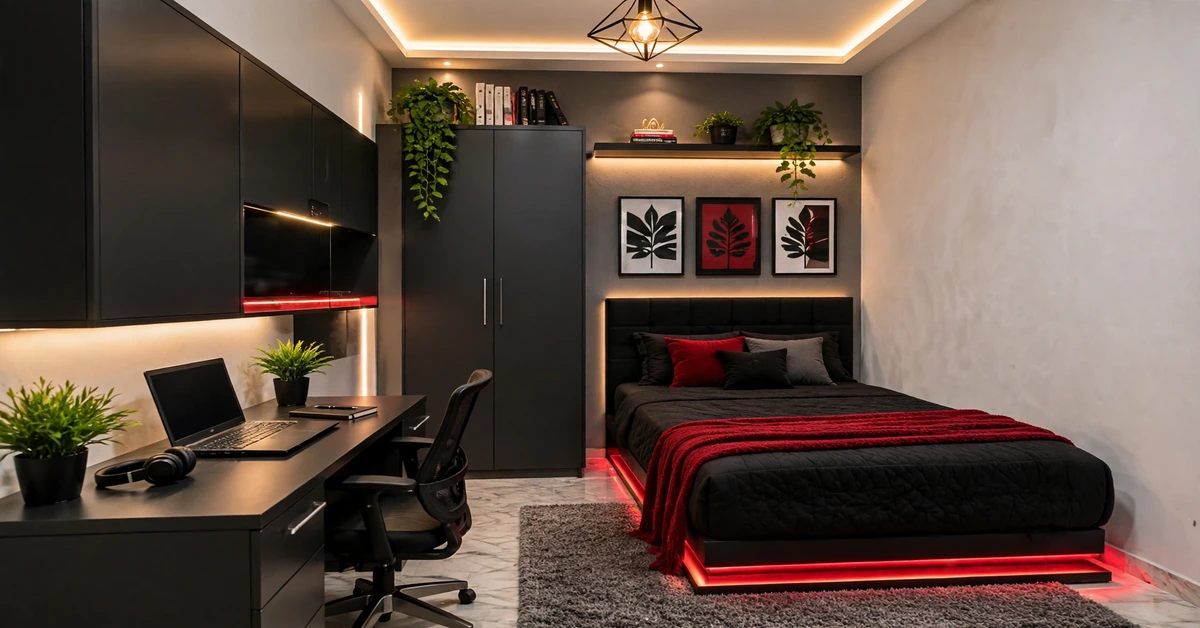
Bold, moody and unapologetically modern, this small bedroom design proves that dark colours can work beautifully in a compact room — as long as the lighting is planned with care. The star of the space is the black upholstered bed, its base outlined by a vivid red LED under-glow that makes the whole bed appear to float above the floor. That single strip does two jobs at once: it adds drama after dark and doubles as a soft night light for late reading.
The bedding keeps the palette disciplined. Black quilted covers are layered with a deep red throw and a mix of black, red and grey cushions, so the red accent feels intentional rather than random. Above the bed, three framed leaf prints repeat the same story — two in black and white, one in red — tying the wall art directly to the bedding below. It is a simple trick, but it makes the whole room feel designed rather than decorated by accident.
Storage is handled by a tall matte black wardrobe that runs almost to the ceiling, swallowing clothes, bedding and clutter without demanding extra floor space. A floating shelf above the bed holds books and trailing plants, lit from beneath so the greenery glows softly in the evening. The compact black study desk sits along the opposite wall with a laptop and an ergonomic mesh chair, giving the room a genuine workspace that never fights the bed for attention. A geometric pendant light, a grey shaggy rug over marble flooring and a few lush plants finish a look that feels more like a boutique hotel room than a small bedroom squeezed for space.
Minimalist Grey & Wood Slat Small Bedroom Decor Idea

If the first look is all drama, this second bedroom is its calm, collected opposite. A vertical dark wood slat panel covers one full wall, adding warmth, texture and a sense of height that flat painted walls simply cannot match. The slats draw the eye upward, which is exactly what you want in a small room — anything that makes the ceiling feel taller makes the floor feel bigger too.
The bed itself is a modern white storage bed, a quiet hero of small-space living. Drawers built into the base hide out-of-season clothes, spare bedding and anything else that would otherwise pile up on a chair. Charcoal bedding with a black-and-white plaid throw keeps the palette soft and restful, while a patterned cushion adds just enough contrast to stop the grey from feeling flat.
Above the bed, two warm LED floating shelves hold books, a small globe and trailing plants, their hidden lighting washing the wall in a gentle amber glow. Between them hangs a black motivational print reading “Dream Plan Achieve”, and beside it a large minimalist wall clock with oversized numerals becomes wall art in its own right. A white two-drawer nightstand holds a glowing lantern and a small potted plant, and a tall leafy plant in the corner softens the hard lines of the wood slats. The window is dressed with zebra blinds that filter daylight without blocking it, and a dark shaggy rug anchors the bed. The result is a room that feels peaceful, organised and quietly confident — proof that minimalism, done well, is never boring.
Cozy Black & Warm LED Small Bedroom with Study Area
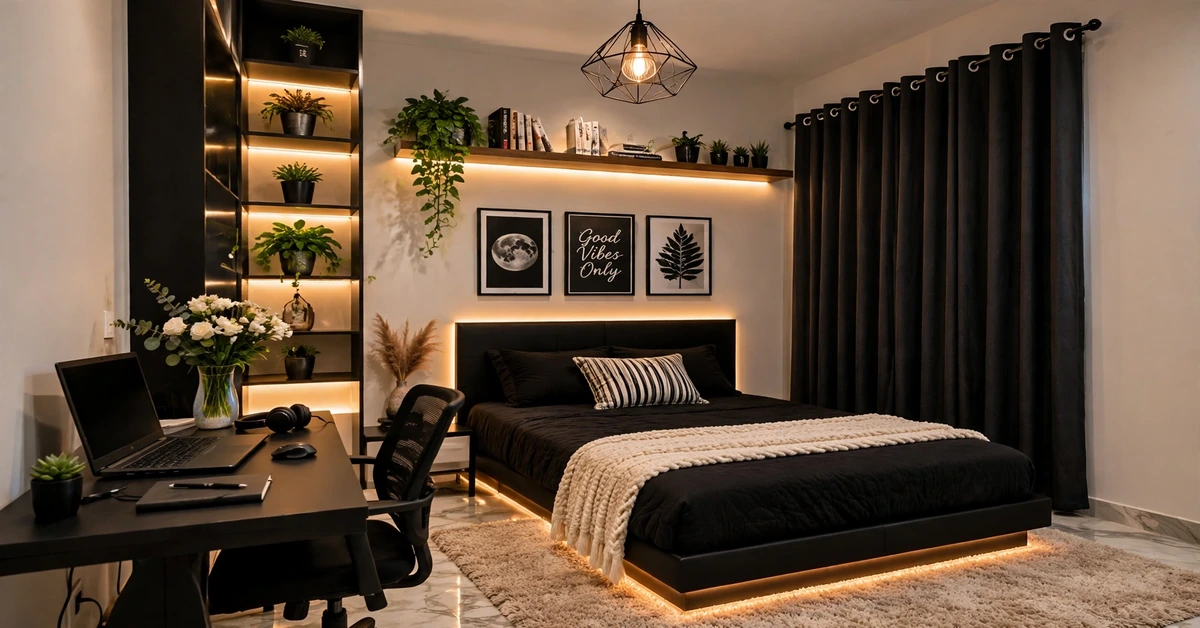
The third look brings the warmth right up. Where the first bedroom used red light for drama, this one uses warm amber LED lighting everywhere — under the bed, behind the shelves, along the ceiling edge — so the whole room glows like candlelight in the evening. The black bed and bedding could easily feel cold, but the amber light and a chunky cream knit throw turn the same dark palette into something soft, inviting and deeply cosy.
The wall above the bed carries three framed prints: a moon photograph, a “Good Vibes Only” quote and a black botanical leaf. Together they set the mood of the room before you even notice the furniture. A geometric pendant light hangs overhead, its exposed bulb echoing the warm LED tones, while dark curtains keep the light controlled and intimate.
What makes this room especially clever is how it fits a full study area into a narrow footprint. A tall backlit shelving unit on the left wall holds potted plants on every shelf, turning storage into a living green wall. The black desk runs along the same wall with a laptop, a vase of white flowers, headphones and a mesh office chair, so work has a clear, defined zone that never spills onto the bed. A plush beige rug over the marble floor adds softness underfoot, and the whole space feels like a private retreat — a bedroom, a study and a quiet reading corner, all in one compact room.
Small Bedroom Design Tips: Layout, Lighting and Storage
All three bedrooms above share the same secret: they were planned from the walls inward, not from a shopping list outward. Before buying a single piece of furniture, sketch your room and decide where the bed goes first. In most small rooms the best spot is against the longest wall, with the headboard centred and at least a narrow path on one side. Pushing the bed into a corner frees up the most floor, but it makes changing the sheets a wrestling match, so only do it if the room is genuinely tiny.
Once the bed is placed, build upward. Tall wardrobes, floating shelves and wall-mounted lighting keep the floor clear, and a clear floor is the single biggest factor in making a room feel larger. Furniture with visible legs, or a floating design, lets the eye read the floor beneath it — and the room as bigger than it is. That is exactly why the LED under-glow in our first two looks works so well: it highlights the gap beneath the bed and makes the furniture feel lighter.
Storage should be invisible wherever possible. A storage bed, an ottoman with a lift-up lid, baskets on the top shelf of the wardrobe and hooks behind the door can absorb an surprising amount of clutter. The rule is simple: if you can see it, it should be beautiful; if it is not beautiful, it should be behind a door. Keep surfaces mostly clear — one plant, one book, one lamp — and the room will feel calm even on a busy morning.
Colour matters more in a small room than anywhere else in the house. Dark walls and bedding can look stunning, as all three of these bedrooms show, but they need light to balance them: warm LEDs, a pale rug, a mirror opposite the window, or light-coloured curtains. If dark feels risky, try the formula in reverse — pale walls and bedding with one dark feature, like a black headboard or a wood slat panel, for the same cosy depth without the commitment. And do not forget plants: a trailing pothos on a shelf or a tall leafy plant in a corner adds life, softens hard edges and costs almost nothing. For more bedroom wall inspiration, see our bedroom gallery wall decor ideas, and browse the full Home Decor archive for more small-space looks.
LED Lighting Ideas That Make a Small Bedroom Feel Bigger
Lighting is the cheapest way to transform a small bedroom, and LED strips are the tool that makes it possible. Unlike a single ceiling light, which flattens a room and casts hard shadows, layered LED lighting creates depth: a strip under the bed, another behind the shelves, a third along the ceiling edge. Each layer adds a soft glow that separates the furniture from the walls and makes the room feel deeper than it really is.
Colour temperature is the detail most people get wrong. For bedrooms, aim for warm white between 2700K and 3000K — the amber glow you see in our third look. Cool white light above 4000K feels clinical and makes dark bedding look grey, so save it for the kitchen. Coloured light, like the red under-glow in the first bedroom, works best as a single accent: one strip, one colour, used sparingly. Two or three competing colours will make the room feel like a nightclub rather than a bedroom.
Dimmers are worth every penny. A bright setting for cleaning and getting dressed, a low warm glow for winding down, and a barely-there night light for the small hours — one set of strips can do all three if you can control them. Place strips where the light itself is hidden and only the glow is visible: under the bed frame, behind the headboard, along the back edge of a floating shelf. The moment you can see the actual strip or its dots, the magic disappears. For authoritative guidance on layering light in compact rooms, Architectural Digest’s small bedroom ideas are a useful reference alongside the looks in this guide.
How to Fit a Study Desk Into a Small Bedroom Without the Clutter
Two of the three bedrooms in this guide include a full study desk, and neither room feels crowded — because the desk was treated as part of the design, not an afterthought. The first rule is placement: put the desk near the window if you can, so you get natural light during the day and a view that makes long study sessions less tiring. If the window wall is taken, the wall beside the wardrobe works well, as long as the chair can slide out without hitting the bed.
Size matters more than style. A desk between 100 and 120 centimetres wide is enough for a laptop, a notebook and a lamp; anything wider starts to dominate a small room. A floating wall-mounted desk is the cleverest option of all — with no legs, the floor beneath stays visible and the room feels larger, and you can mount a shelf above it for books and supplies. If you prefer a freestanding desk, choose one with drawers or a modesty panel so cables, chargers and paperwork have somewhere to hide.
Keep the work zone visually separate from the sleep zone, even in one small room. A change in lighting helps: a small desk lamp with warm light marks the desk as its own space after dark. So does a change in colour — a black desk against a pale wall, or a wooden desk against dark panelling, reads as a deliberate zone rather than furniture that drifted into the wrong place. A mesh office chair, like the ones in our first and third looks, is a smart pick because you can see through it; a solid chair blocks light and sightlines and makes the room feel smaller.
Finally, protect your sleep. End each day by clearing the desk surface completely and closing the laptop, so the room still feels like a bedroom instead of an office you happen to sleep in.
Conclusion
These three bedrooms prove the same point from three different angles: a small room is not a limitation, it is a brief. The black-and-red look shows how bold colour and LED light can give a compact space a boutique-hotel attitude. The grey-and-wood look shows how texture, warm shelving and a storage bed can make minimalism feel calm rather than empty. And the warm black look shows how amber light, plants and a proper study corner can turn a narrow room into a genuine retreat.
Whichever mood speaks to you, the method is the same. Start with the bed, build storage upward, layer warm LED light, and give every object a reason to be there. A thoughtful small bedroom design does not need a big budget or a big floor plan — it needs clear decisions, a consistent palette and lighting that flatters the room after dark. Pick your favourite of the three looks, borrow its best ideas, and make your small bedroom the most loved room in the house.
Frequently Asked Questions
What is the best colour scheme for a small bedroom?
There is no single best scheme, but the safest formula is a mostly light or mostly dark palette with one strong accent. Pale walls with a dark headboard feel airy, while dark bedding with warm LED lighting feels cosy and luxurious. Repeat your accent colour at least three times — bedding, wall art and lighting — so the room feels designed rather than random.
How can I add a study desk to a small bedroom?
Choose a compact desk between 100 and 120 centimetres wide and place it near the window or along the wardrobe wall. A floating wall-mounted desk saves the most floor space, and a mesh chair keeps sightlines open. Add a desk lamp and a small shelf above the desk so books and supplies stay off the work surface.
Are LED lights good for small bedrooms?
Yes — LED strips are one of the best upgrades for a small bedroom. Hidden strips under the bed, behind shelves and along the ceiling create layered, warm light that makes the room feel deeper and more spacious. Choose warm white (2700K–3000K), add a dimmer, and use colour only as a single accent so the room stays restful.
How do I make a small bedroom look bigger?
Keep the floor as clear as possible with tall wardrobes, floating shelves and a storage bed. Use furniture with visible legs or a floating design, add a mirror opposite the window, choose one consistent colour palette, and layer warm lighting instead of relying on a single ceiling light. A few plants and a pale rug will soften the room and complete the effect.