A vertical garden is one of the smartest ways to turn a small backyard, a narrow side passage, or even a plain wooden fence into a productive and beautiful outdoor room. Instead of spreading plants across the ground, you grow upward — lettuces, herbs, tomatoes, and flowers stacked in tiers on a wall, a fence, or a freestanding frame — so a patch of garden that once held a single bed can suddenly feed a family and look like a magazine photograph at the same time. In this guide, we look at three very different takes on the idea: a modern fence garden with a deep raised bed, a romantic illuminated trellis wall, and a compact freestanding plant stand with built-in LED lighting. Each one proves that you do not need a large plot to grow your own food in style.
What links the three designs is a simple, practical idea: combine growing space with structure. A bare fence or a blank wall is wasted space in most gardens, yet it is the perfect place to hang planters, train climbers, and mount lights. Add a raised bed along the base, and the whole arrangement becomes a complete little kitchen garden — tall crops and trailing plants above, generous soil for roots below, and a tidy edge of pebbles and stepping stones to keep everything looking finished. The result is a garden that works hard and looks deliberate, whether you see it from the patio in daylight or from the kitchen window after dark.
Before you choose a design, think about what your space actually offers. How many hours of sun does the wall or fence receive? Leafy greens and herbs are happy with four to six hours, while tomatoes, chillies, and peppers want as much sun as you can give them. Water matters just as much: wall planters dry out faster than beds in the ground, so a watering can, a drip line, or a routine of watering every evening makes all the difference. And do not forget weight — wet soil is heavy, so any frame fixed to a fence or wall needs solid screws, sturdy brackets, and a fence in good repair.
Throughout this article, we break down each design in detail — the structure, the planting, the lighting, and the small practical details that make it work day after day — and finish with a simple planning and maintenance guide, so you can build one with confidence. Whether you have a generous backyard or a pocket-sized patio, one of these three setups is almost certain to fit.
For more ideas in the same spirit, browse our Home Decor collection, and if you love beautifully lit wall features, you may also enjoy our earlier feature — Bedroom Gallery Wall Decor Ideas.
Table of Contents
- Modern Vertical Fence Garden & Raised Bed Setup
- Illuminated Garden Trellis & Wooden Raised Bed Design
- Illuminated Tiered Freestanding Vertical Plant Stand
Modern Vertical Fence Garden & Raised Bed Setup
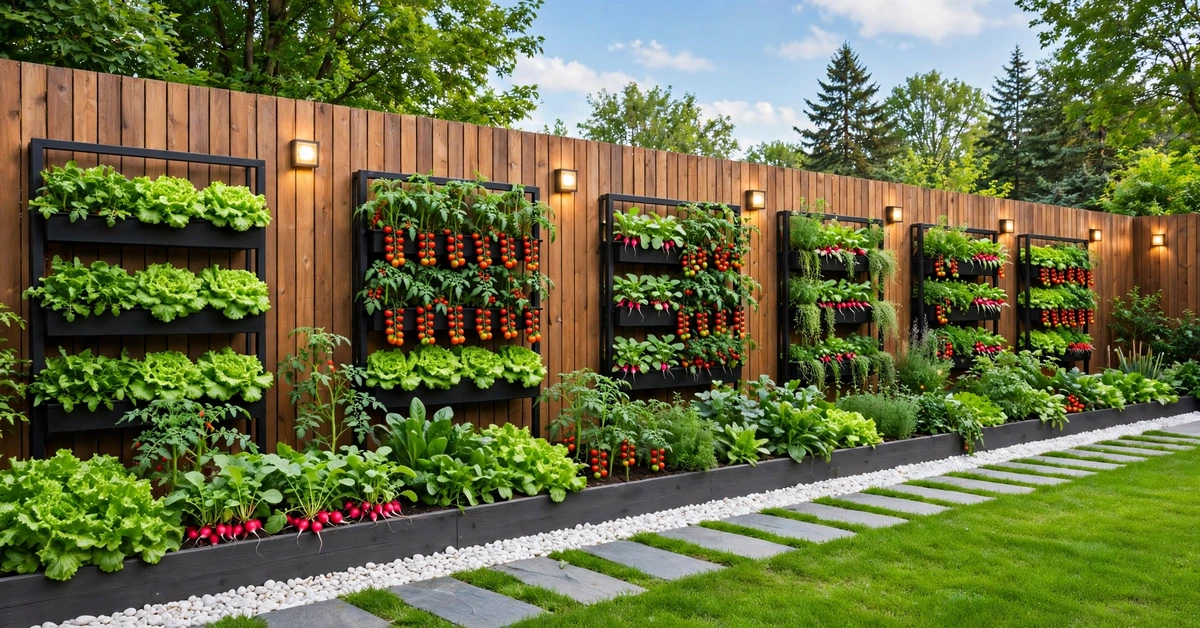
There is something deeply satisfying about this first design, because it takes the most ordinary feature of a backyard — a plain wooden fence — and turns it into the hardest-working part of the garden. Black-framed, multi-tiered wall planters are mounted in a neat row along the warm brown fence, each level overflowing with a different crop: crisp green lettuce on the top shelf, bright red radishes and cherry tomatoes in the middle, and trailing herbs spilling over the edges below. Small square wall lights are fixed between the frames, washing the timber with a warm glow as evening falls. It is a setup that looks designed rather than improvised, and the straight lines of the frames suit a modern home perfectly.
What makes this fence garden so effective is the way the wall planting and the raised bed work together. The planters on the fence hold the shallow-rooted, quick crops — salad leaves, radishes, and herbs you pick a handful at a time — while the long, deep raised bed at the base takes the hungrier plants: generous heads of lettuce, leafy greens, and tomato plants with room to spread their roots. Because the bed is raised, the soil warms up earlier in spring, drains well after rain, and is far easier on your back at harvest time. The dark grey timber of the bed echoes the black planter frames above, so the whole wall reads as one coordinated piece of garden furniture rather than a collection of separate pots.
The finishing details are what lift this design from practical to polished. A border of smooth white pebbles runs along the front of the bed, keeping mud off the lawn and giving the planting a clean edge, while large grey stepping stones set into the grass create a path for harvesting without treading on the soil. In a small backyard, this combination is especially valuable: the fence does the growing, the bed does the feeding, and the ground stays open for a lawn, a table, or a play area. If you want a modern, productive garden that still feels calm and uncluttered, this fence-and-bed pairing is the most complete of the three — a real kitchen garden disguised as a beautiful boundary wall.
Illuminated Garden Trellis & Wooden Raised Bed Design
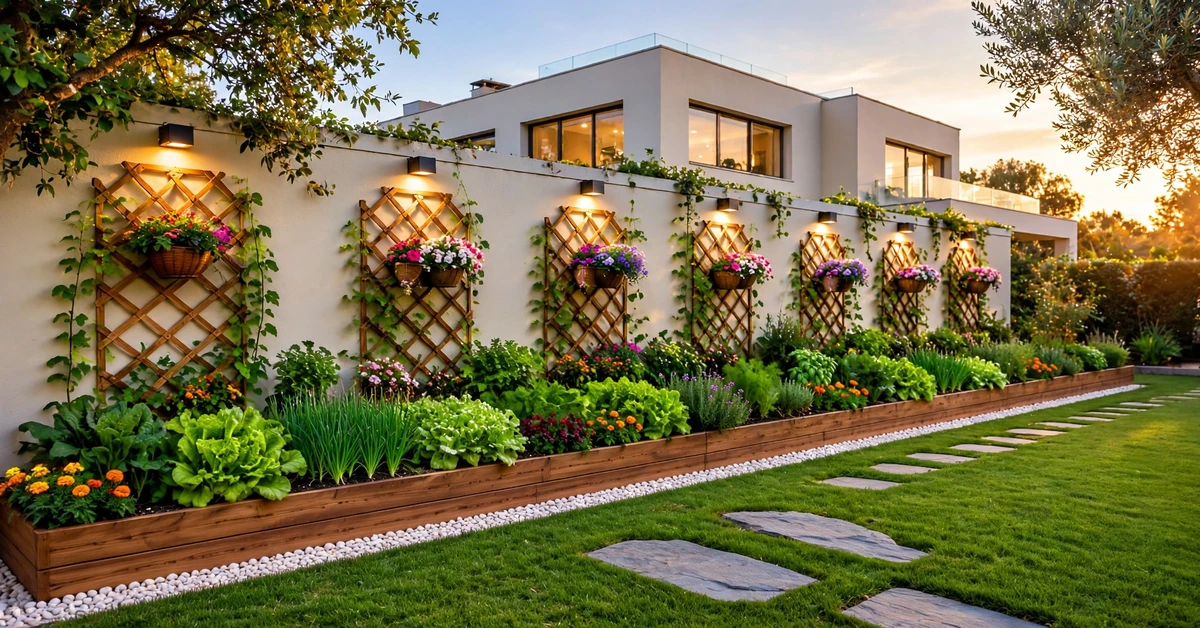
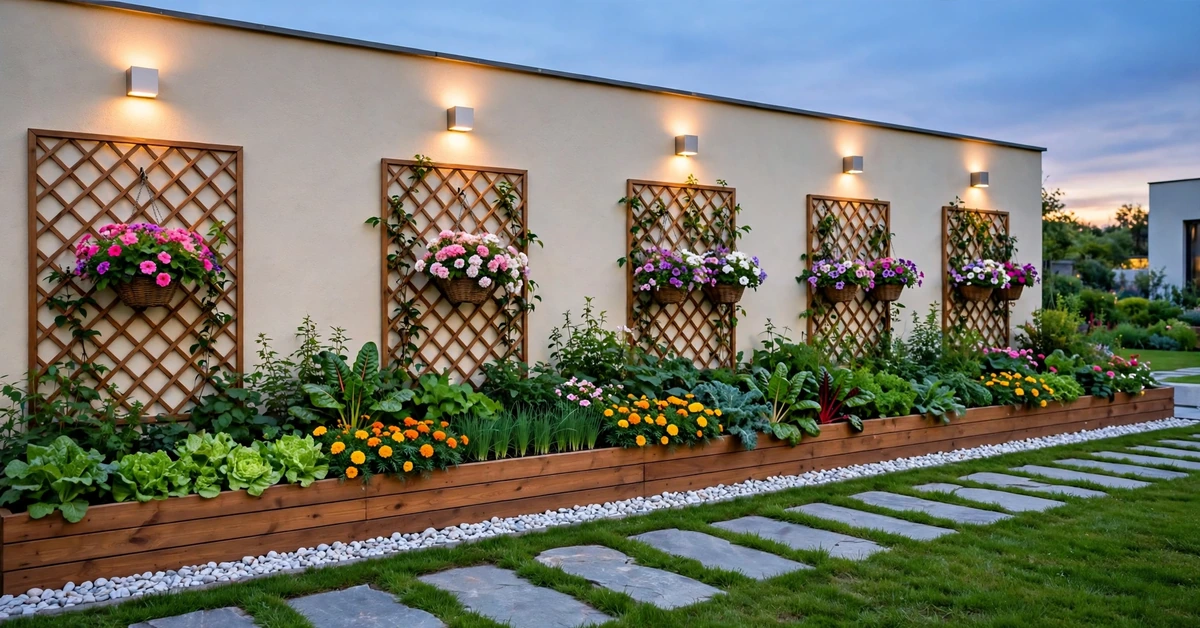
If the first design is modern and architectural, this second one is pure romance. A soft cream garden wall is dressed with wooden diamond-lattice trellises, each one carrying a hanging wicker basket that overflows with colour — pink petunias, white blossoms, and purple trailing flowers — while climbing green vines wind their way up the lattice and across the wall. Warm square sconce lights are mounted above each trellis, so that as dusk falls the whole wall glows gently, and the flowers seem to float against the light. It is the kind of backdrop that turns an ordinary evening in the garden into something worth lingering over, and it photographs beautifully from every angle.
Below the trellises, a long wooden raised bed carries the practical side of the design. Crisp lettuce heads, feathery chives, orange marigolds, and leafy greens grow side by side in rich, dark soil, with a few bright flowers tucked in among the vegetables to draw in pollinators. The warm timber of the bed picks up the honey colour of the trellises, so the wall and the bed feel like one thoughtful composition, finished with the same white pebble border and stepping stones as the first design. This is a garden that feeds the household and the eye at the same time — a vegetable patch you would happily show to guests.
The trellis itself is the cleverest part of this design, because it earns its place in three ways at once. It is a support for climbing plants, a frame that gives the hanging baskets a home, and a decorative panel that makes a plain wall interesting even in winter, when the baskets are empty. Roses, jasmine, sweet peas, or climbing beans will all take to it happily, and each season the wall changes its character as the planting grows and fades. The lighting is worth copying too: warm white light, rather than cool blue-white, flatters both the timber and the flowers, and a simple timer means the wall lights itself every evening without a thought. For anyone who wants their garden to feel like an outdoor living room — a place to sit, to eat, and to unwind — this illuminated trellis design is the warmest and most charming of the three.
Illuminated Tiered Freestanding Vertical Plant Stand
The third design is the most flexible of the three, and for many homes it will be the most useful. Instead of being fixed to a fence or a wall, this is a freestanding planter stand: a tall black metal frame with three deep wooden planter shelves, each one lit from above by its own warm LED strip. The top shelf holds black pots of rosemary, dill, and leafy herbs; the middle shelf is packed with lettuce, basil, and cherry tomatoes hanging in bright red clusters; and the bottom shelf carries bushy greens and red chillies. A trailing vine spills down the left side of the frame, softening the straight lines, and a large potted plant stands on the ground beside it. A classic wall lantern glows warmly on the house wall behind, completing a scene that feels both modern and cosy.
The LED lighting is what makes this stand genuinely different from an ordinary shelf of pots. Each strip sits just above the plants on the shelf below, giving them a boost of light on cloudy days and in shaded corners, and turning the whole stand into a glowing feature after dark. Herbs and salad leaves are particularly happy here, because they get steady, even light and every plant is within easy reach. The freestanding frame has another advantage fixed designs cannot match: you can move it. Wheel it into the sun in spring, tuck it against a sheltered wall in a storm, or bring it close to the kitchen door in summer so the herbs are always within arm’s reach while you cook.
This is also the best choice of the three for a small patio, a balcony, or a rented home. It needs no drilling and no permanent change to the property — just a flat patch of ground and a nearby power point for the lights. The footprint is barely larger than a single raised bed, yet the three tiers hold as many plants as a whole row of pots, which makes it the most space-efficient option here. Style it simply and let the plants do the talking: keep one shelf for herbs, one for salads, and one for something colourful like tomatoes or chillies, and resist the urge to overfill it. With its warm glow and its neat, upright shape, this illuminated tiered stand brings the feeling of a full garden to the smallest of outdoor spaces.

How to Plan and Maintain Your Vertical Garden
Choosing the design is only the beginning; a little planning is what keeps a vertical garden productive instead of merely pretty. Start with the sun: watch your wall or patio for a day and note where the light falls, because most vegetables want at least six hours of direct sun, while salads and herbs will manage with four. Then think about water, which is the single biggest difference between wall planting and growing in the ground. Wall planters and shallow shelves dry out quickly on a warm day, so plan for a daily water in summer — a drip irrigation line on a timer is the easiest solution, but a watering can every evening works just as well if the planters are within easy reach.
Soil and feeding come next, and they matter more in containers than in open ground. Use a good-quality, moisture-retentive compost, and mix in a little slow-release fertiliser at planting time, because the plants have only a small volume of soil to draw from. Feed leafy crops every couple of weeks with a liquid feed through the growing season, and top up the planters with fresh compost between plantings. Good drainage is essential too: every planter needs holes in its base, and a layer of small stones at the bottom will stop them clogging. If water cannot escape, roots will sit wet and rot — the most common reason a beautiful wall garden fails in its first season.
Finally, plant with the seasons and keep the display tidy. Put quick crops like lettuce, radishes, and herbs in the easiest-to-reach spots, because you will harvest them often, and give tomatoes, beans, and chillies the sunniest, deepest planters. Pick little and often — salad leaves grow back faster when they are cut regularly — and replace finished plants promptly so no shelf sits empty for long. A quick weekly check for pests, a snip of anything overgrown, and a wipe of the LED strips will keep the whole arrangement looking sharp. For more detailed growing advice, the Royal Horticultural Society has excellent guides on growing your own vegetables at home. With those few habits in place, any of the three designs in this article will reward you with fresh food and a beautiful wall for months at a time.
Conclusion
A vertical garden turns the most overlooked surfaces in your outdoor space — a fence, a blank wall, a bare corner of the patio — into a place that grows food, frames flowers, and glows gently after dark. The modern fence garden pairs wall planters with a deep raised bed for a complete, hardworking kitchen garden. The illuminated trellis wall brings romance and warmth to an ordinary boundary, with flowers above and vegetables below. And the freestanding tiered stand proves that even the smallest patio can hold a productive, beautifully lit garden without a single screw in the wall. Whichever design speaks to you, the principles are the same: give your plants sun and water, feed them well, and choose a structure that suits your space. Your fence will never look ordinary again — and your salads will never taste fresher.
Frequently Asked Questions
How much sun does a vertical garden need?
Most vegetables, including tomatoes, chillies, and peppers, need at least six hours of direct sunlight a day to crop well. Leafy salads, herbs, and many flowers will manage with four to six hours. Before you build, watch your wall for a day and give the sunniest spot to the hungriest crops, saving shadier corners for lettuce and herbs.
How often should I water wall planters?
Wall planters and shallow shelves dry out much faster than beds in the ground, so in warm weather they usually need watering once a day, and sometimes twice during a heatwave. Water in the early morning or evening, and check the soil with your finger — if the top few centimetres feel dry, it is time to water. A drip irrigation line on a timer makes this almost effortless.
Can I build a vertical garden on a rented property?
Yes — the freestanding tiered plant stand is ideal for renters, because it needs no drilling and no changes to the property at all. Freestanding frames and large pots on a balcony work the same way. Just check that your balcony or patio can take the weight of soil-filled planters, and keep the stand where it cannot blow over in strong wind.
What vegetables grow best in a vertical garden?
Shallow-rooted, quick crops do best: lettuce, spinach, radishes, spring onions, and herbs such as basil, mint, and parsley. Tomatoes, chillies, and strawberries also thrive in deeper wall planters and on tiered shelves, especially with regular feeding. Root vegetables like carrots and potatoes need much deeper soil, so leave them to the raised bed at the base rather than the wall itself.